Russia claims that oil trade with India will remain unaffected by Trump’s tariffs.

150 Views

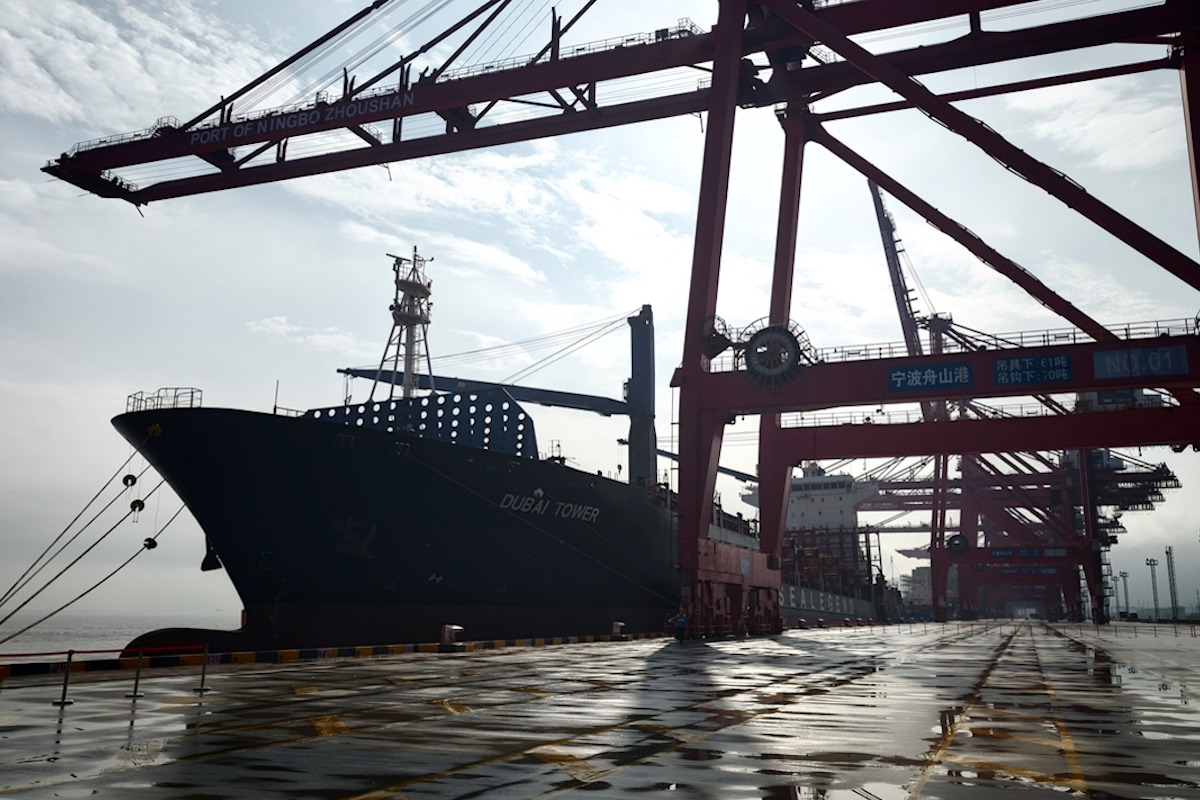
India ranks as the second largest purchaser of Russian oil following China, with Moscow providing nearly 40% of its energy needs.
On Wednesday, Russia rejected worries regarding sanctions and tariffs imposed by the US and European Union (EU) affecting oil shipments to India, with high-ranking Russian officials asserting that Moscow has a “unique mechanism” to circumvent punitive actions enforced by the Donald Trump administration to restrict energy commerce.
Russia continues to be a “partner of choice” for India in defense, and the confrontations between India and Pakistan in May acted as a “highly effective battle test” for Russian arms like the S-400 air defense system, chargé d’affaires Roman Babushkin shared during a media briefing. He verified that President Vladimir Putin will visit India later this year for an annual summit, although the dates have not yet been confirmed.
India is the second biggest purchaser of Russian oil following China, with Moscow supplying nearly 40% of the nation's energy needs. Acquisitions were notably increased following the imposition of sanctions by the West on Russia due to the invasion of Ukraine in 2022. Starting August 28, the US will implement a 25% punitive tariff on Indian exports due to Russian oil purchases, alongside a reciprocal 25% tariff.
Babushkin and deputy trade commissioner Evgeny Griva, nonetheless, were assured that Russia could bypass pressure from the US and its Western partners regarding energy trade with India.
“Regardless of the political context, we can expect that the volume of crude oil imports will be roughly unchanged,” Griva stated. “Certainly, there are various methods to provide crude oil.” "We are unable to talk about it as it’s truly a unique mechanism."
Babushkin stated: “This is not the first occasion that our trade and economic ties have been jeopardized by outside influences. Yet, on every occasion, we have succeeded in discovering methods to enhance our collaboration grounded in our shared national interests. We are very confident that our collaboration will persist.
Officials stated that oil deliveries to the Vadinar refinery in Gujarat, co-owned by Russian energy firm Rosneft and an investment consortium, were unaffected after being included in a EU sanctions package in July. The Vadinar plant, where Rosneft holds a 49.13% interest, is India's second biggest single-location refinery with a yearly capacity of 20 million metric tonnes (MMT).
Griva mentioned that Russia has a system in place to address shipping and insurance challenges stemming from EU sanctions, and crude is provided directly to the refinery as it is a Rosneft subsidiary. “The latest sanctions imposed by the EU on Russia are unlikely to significantly affect Russian oil trading, as we have notably decreased our reliance on the services that the EU offers in recent years,” Babushkin stated.
Officials, however, admitted that a 5% fluctuation is feasible in oil import prices due to the Western tariffs and sanctions, although this will depend on negotiations. They mentioned that India and Russia were progressing towards the goal of boosting bilateral trade to $100 billion by 2030, aided by a steady annual growth of approximately 10%.
Bilateral trade reached an all-time high of $68.7 billion in 2024-25, while India's exports amounted to just $4.88 billion, with Babushkin stating that Russia is striving to resolve the trade disparity. "We must decrease the trade deficit, which is presently approximately $60 billion." We will eliminate trade obstacles, enhance engagement within the business community, and invigorate alternative logistics routes. “Babushkin mentioned that we will enhance our systems for payments and transactions.”